
10% Happier
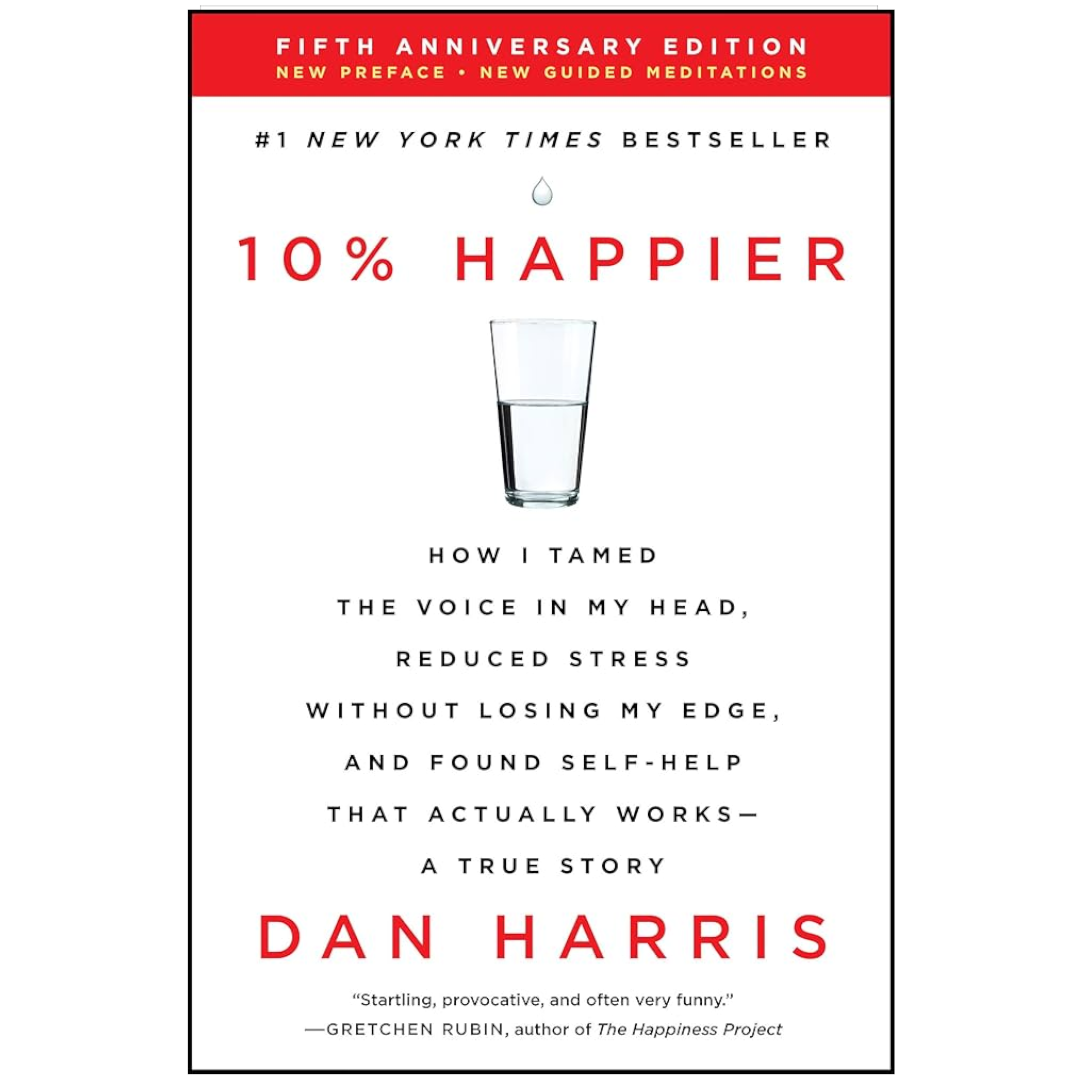
10% Happier by Dan Harris is a candid and often humorous exploration of meditation, scepticism, and personal change. Harris, a news anchor who experienced a live on-air panic attack, begins the book from a position of doubt about spirituality and self-help culture. His journey into mindfulness is therefore grounded in realism rather than blind enthusiasm.
Following his panic attack, Harris begins questioning the relentless pace, ambition, and inner chatter that had quietly shaped his life. Through encounters with scientists, meditation teachers, and fellow journalists, he investigates whether mindfulness can genuinely improve mental well-being without requiring mystical beliefs. The result is a pragmatic approach to meditation stripped of jargon and exaggerated promises.
Harris presents meditation not as a cure-all, but as a practical tool for managing the “voice in the head” that fuels stress, distraction, and emotional reactivity. He explains how regular mindfulness practice increases awareness of thoughts without being controlled by them. This awareness creates a small but powerful gap between stimulus and response.
The book balances memoir with research, making complex ideas accessible and relatable. Harris openly shares his resistance, missteps, and gradual acceptance of meditation’s benefits. His honesty makes the message more convincing, especially for readers wary of overly spiritual narratives.
Ultimately, 10% Happier suggests that happiness does not require a dramatic transformation. Even modest improvements in focus, patience, and emotional regulation can meaningfully improve quality of life. The title reflects this grounded promise: not perfect bliss, but measurable, sustainable progress.
5 Key Takeaways
1. Meditation Can Be Practical, Not Mystical
Harris demonstrates that mindfulness does not require adopting spiritual beliefs. By focusing on attention and awareness, readers can use meditation as a straightforward mental training tool. This practical framing makes the practice accessible to sceptics and busy professionals alike.
2. Awareness Reduces Emotional Reactivity
The book shows how observing thoughts and emotions creates space before reacting. This pause allows readers to respond more thoughtfully in stressful situations. Over time, this skill improves patience, communication, and overall emotional stability.
3. Small Improvements Have Meaningful Impact
Harris argues that dramatic life overhauls are unnecessary. Even slight increases in calmness and focus can noticeably improve daily experience. This realistic expectation encourages consistency without the pressure of achieving perfect serenity.
4. The Inner Voice Is Not Always Truth
Through mindfulness, readers learn to question the constant mental commentary that drives anxiety and self-criticism. Recognising thoughts as passing events rather than facts reduces their power and fosters greater mental clarity.
5. Consistency Builds Mental Fitness
Like physical exercise, meditation requires regular practice. Harris highlights that gradual, repeated sessions strengthen attention and resilience. Readers gain confidence knowing that steady effort, rather than intensity, leads to lasting psychological benefits.