
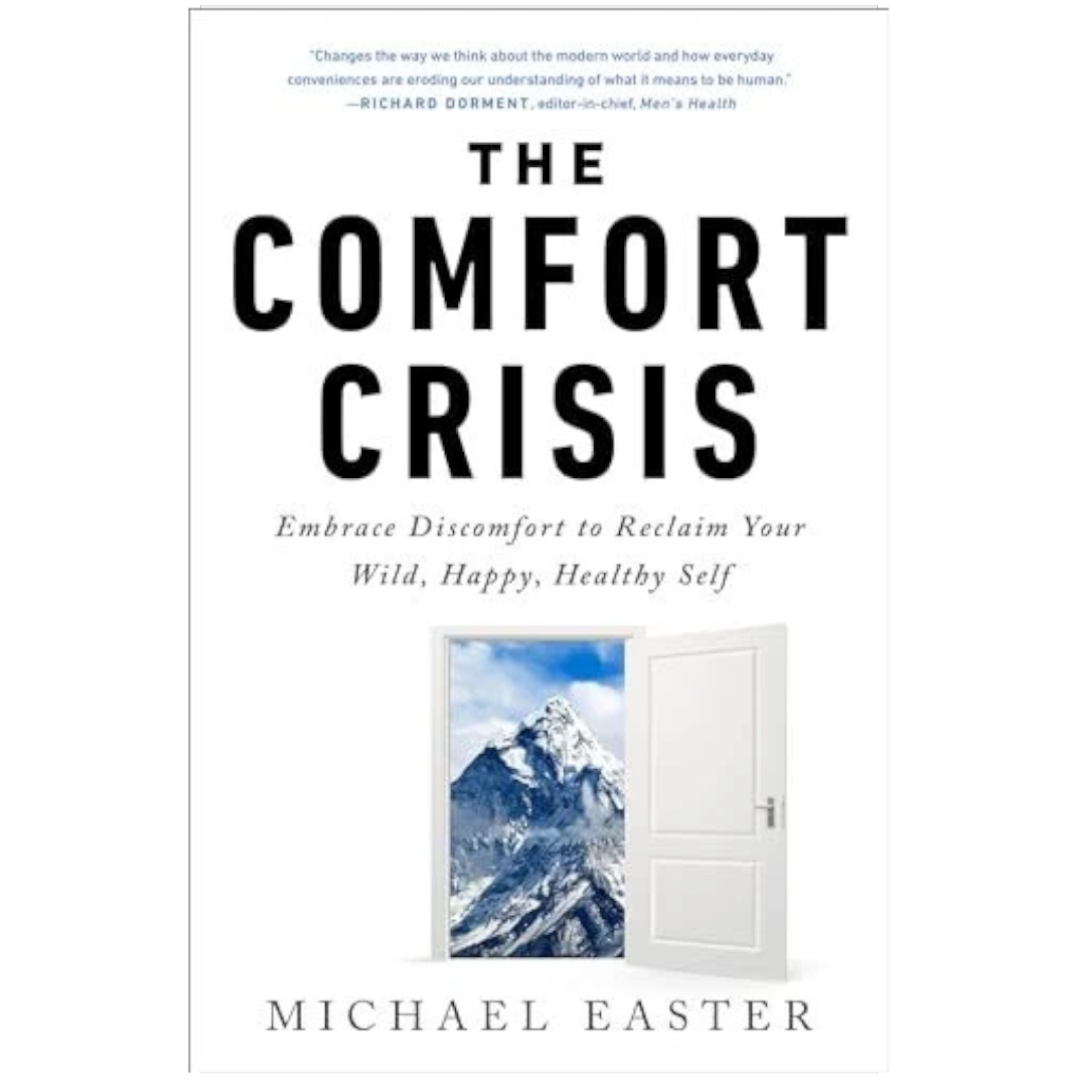
The Comfort Crisis
The Comfort Crisis by Michael Easter explores how modern life’s focus on comfort and convenience is quietly undermining health, resilience, and fulfilment. Combining personal experiences with research in psychology, physiology, and anthropology, Easter argues that humans have evolved to thrive under challenge, and avoiding discomfort has created both physical and mental weaknesses.
The book challenges the notion that comfort equals happiness. Easter illustrates how sedentary lifestyles, over-reliance on technology, and avoidance of difficult situations limit growth. By contrast, intentionally seeking controlled discomfort—through physical exertion, mental challenges, or exposure to the natural world—can boost resilience, improve health, and sharpen decision-making.
Easter shares narratives from extreme adventures, including long treks in harsh environments and physically demanding expeditions, to show how stepping outside comfort zones accelerates personal growth. He blends these stories with scientific evidence demonstrating the benefits of stress exposure, intermittent fasting, and periods of solitude or reflection. These practices help the body and mind adapt, enhancing endurance, focus, and emotional regulation.
The book also emphasises mindset, encouraging readers to rethink failure, struggle, and pain as opportunities rather than threats. By reframing discomfort as a tool for growth, individuals can break cycles of complacency and rediscover a sense of purpose and vitality.
Overall, The Comfort Crisis is a call to reclaim challenge in everyday life. It provides both inspiration and practical advice, inviting readers to confront fear, embrace uncertainty, and cultivate resilience, demonstrating that meaningful growth rarely comes from ease and convenience.
5 Key Takeaways
1. Growth Requires Controlled Discomfort
Easter demonstrates that intentional exposure to physical, mental, or emotional challenges strengthens resilience. Avoiding discomfort may feel safe, but it limits development. By stepping outside comfort zones in a structured way, readers can improve endurance, adaptability, and confidence, creating lasting benefits in both personal and professional life.
2. Modern Comfort Can Be Harmful
The book explains how sedentary habits, overuse of technology, and constant convenience lead to physical and mental decline. Recognising these dangers helps readers understand the value of challenge and motivates small, deliberate actions to counteract the effects of comfort-driven lifestyles.
3. Mindset Shapes Response to Stress
Viewing struggle and failure as opportunities rather than threats transforms challenges into learning experiences. Easter emphasises that adopting this mindset reduces fear, enhances problem-solving, and promotes personal growth, making it easier to embrace situations that initially feel daunting or uncomfortable.
4. Nature and Adventure Boost Resilience
The book highlights the benefits of spending time in natural, demanding environments. Activities such as hiking, trekking, or adventure sports expose individuals to controlled stressors that improve both mental and physical health, fostering focus, patience, and a greater appreciation for life’s challenges.
5. Small Daily Challenges Compound Benefits
Easter encourages integrating minor, intentional discomforts into everyday routines—cold showers, intermittent fasting, or physical exertion. These small, consistent practices build mental toughness, enhance well-being, and cultivate the habit of confronting difficulties rather than avoiding them, creating long-term resilience and confidence.