
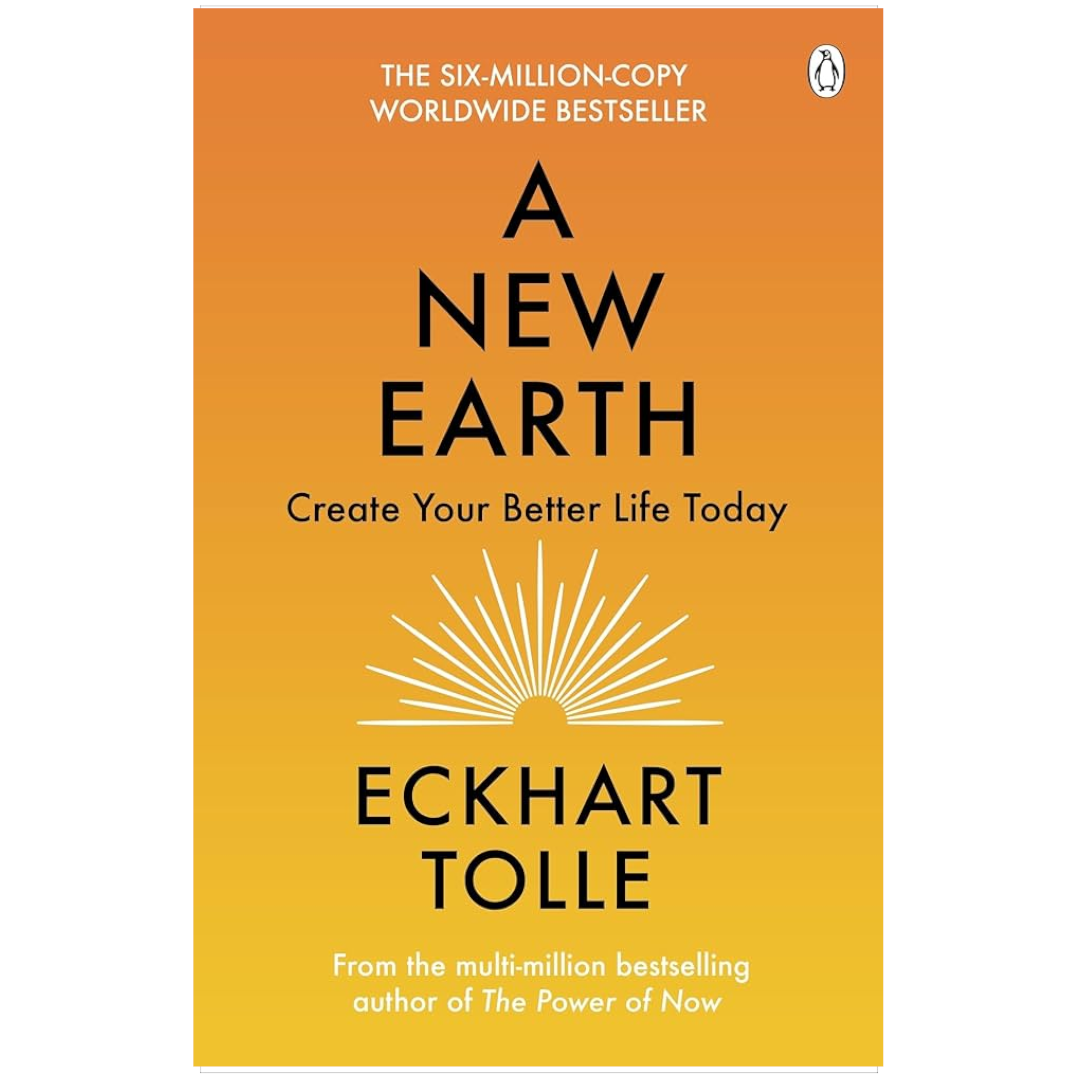
A New Earth
A New Earth by Eckhart Tolle is a spiritual and philosophical exploration of consciousness, ego, and the possibility of inner transformation. Building on the ideas introduced in The Power of Now, Tolle invites readers to examine how identification with thought, emotion, and social roles creates unnecessary suffering, both individually and collectively.
At the centre of the book is the concept of the ego: the false sense of self formed through labels, comparisons, and attachment to past and future. Tolle argues that much of human conflict, anxiety, and dissatisfaction stems from this ego-driven state of mind. By becoming aware of these patterns rather than unconsciously living through them, individuals can begin to loosen the ego’s grip.
Tolle also introduces the idea of “presence” as a gateway to awakening. Presence involves observing thoughts and emotions without judgment, allowing awareness to arise in the space beneath mental noise. This shift does not require withdrawal from everyday life; instead, it transforms how one relates to work, relationships, and challenges.
The book connects personal awakening to a broader collective shift in human consciousness. Tolle suggests that as individuals become more present and less ego-identified, they contribute to a more compassionate and conscious world. Suffering, while painful, is framed as an opportunity for awakening when it is met with awareness rather than resistance.
Overall, A New Earth offers a gentle yet challenging invitation to live more consciously. It encourages readers to find meaning not through external achievement or identity, but through inner awareness, acceptance, and alignment with the present moment.
5 Key Takeaways
1. Ego Is the Source of Much Suffering
Tolle explains that identifying too strongly with thoughts, roles, and possessions creates a false self that constantly seeks validation. By recognising ego-driven patterns, readers can create space between awareness and identity, reducing conflict, anxiety, and emotional reactivity in everyday life.
2. Awareness Creates Inner Freedom
The book emphasises that observing thoughts and emotions without judgement weakens their control. This awareness allows readers to respond consciously rather than react automatically. Over time, this practice fosters calm, clarity, and a sense of freedom that is not dependent on external circumstances.
3. The Present Moment Is Where Life Happens
Tolle reminds readers that most suffering comes from dwelling on the past or worrying about the future. By grounding attention in the present moment, individuals can access peace and vitality. This shift improves focus, deepens relationships, and reduces mental overwhelm.
4. Pain Can Be a Path to Awakening
Rather than avoiding pain, Tolle encourages meeting it with awareness. Difficult experiences can dissolve ego identification when observed consciously. Readers learn that suffering often signals the opportunity for growth, acceptance, and deeper understanding of themselves and life.
5. Inner Change Supports Collective Change
A New Earth suggests that personal awakening contributes to wider societal transformation. As individuals become less ego-driven, they naturally act with greater compassion and responsibility. This shift in consciousness, multiplied across people, supports a more peaceful and sustainable world.