
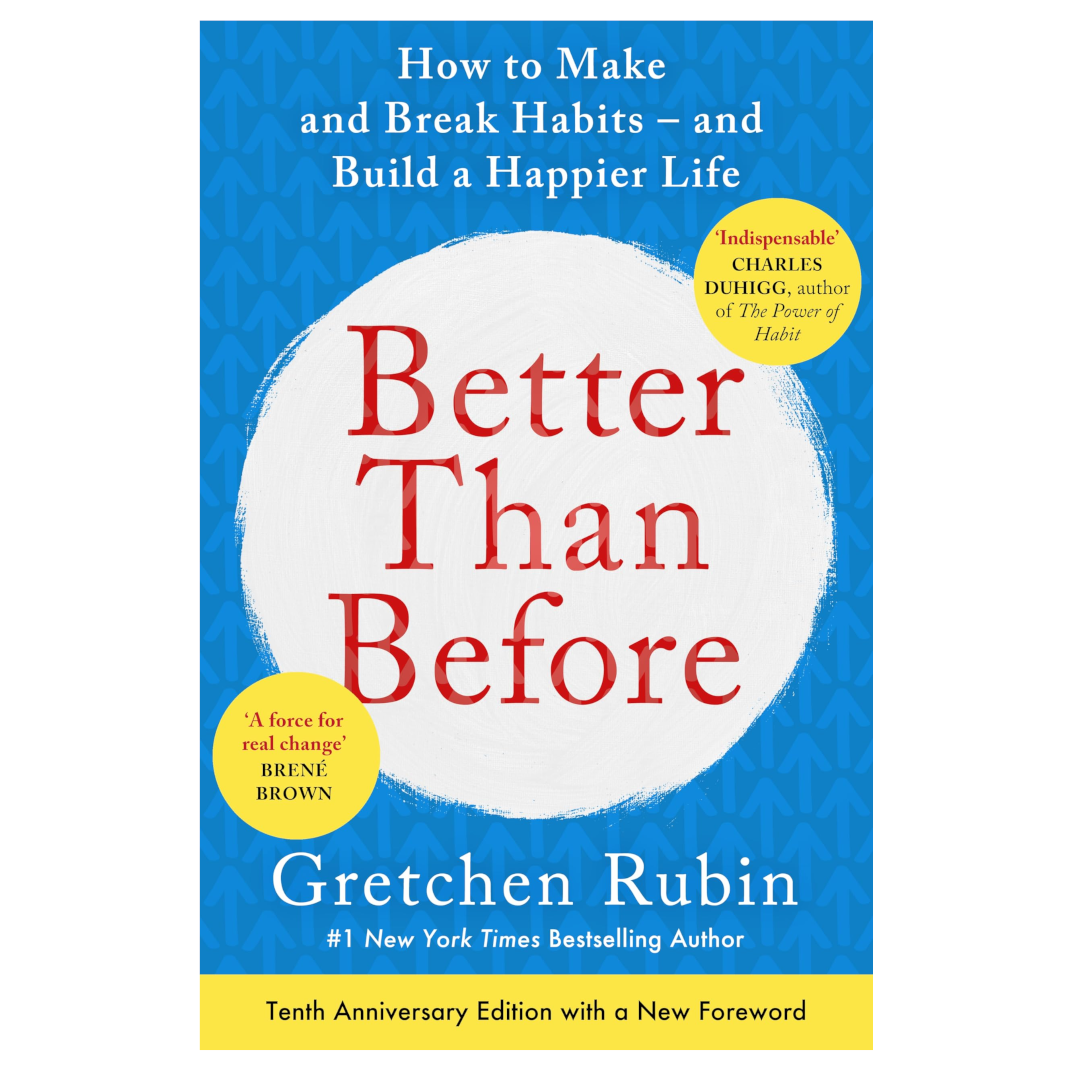
Better Than Before
Better Than Before by Gretchen Rubin explores how habits are formed, why they succeed or fail, and how individuals can create lasting positive change by working with their natural tendencies rather than against them. Rather than offering a one-size-fits-all formula, Rubin focuses on self-knowledge as the foundation of effective habit change.
At the heart of the book is the idea that people respond differently to expectations. Rubin introduces the Four Tendencies framework—Upholder, Questioner, Obliger, and Rebel—to explain how individuals meet inner and outer expectations. Understanding one’s tendency helps explain past habit failures and offers insight into strategies that are more likely to work in the future.
Rubin combines behavioural psychology, personal anecdotes, and practical research to show that habits are not about willpower alone. Instead, they are shaped by environment, accountability, identity, and clarity. Small adjustments, such as removing friction or adding convenience, can make good habits easier and bad habits harder without relying on constant self-control.
The book also challenges common assumptions about habit formation, including the idea that abstinence or moderation works for everyone. Rubin demonstrates that different people succeed with different approaches, and that knowing what doesn’t work for you is just as valuable as knowing what does.
Overall, Better Than Before is a flexible and compassionate guide to behaviour change. It empowers readers to stop copying other people’s routines and instead design habits that align with their personality, values, and real-life constraints, making change feel achievable and sustainable rather than exhausting.
5 Key Takeaways
1. Self-Knowledge Is the Key to Habit Change
Rubin emphasises that understanding how you respond to expectations is essential for building habits that last. By identifying your personal tendency, you can stop using strategies that drain motivation and start using approaches that feel natural, reducing frustration and increasing long-term consistency.
2. There Is No Universal Habit Formula
The book dismantles the myth that one method works for everyone. Rubin shows that success depends on individual preferences, motivations, and circumstances. This insight frees readers from guilt when popular techniques fail and encourages experimentation to find strategies that genuinely fit their lifestyle.
3. Environment Often Matters More Than Willpower
Rubin highlights how small environmental changes can dramatically influence behaviour. By reducing friction for good habits and increasing friction for bad ones, readers can rely less on self-control and more on smart design, making positive behaviours easier to repeat automatically.
4. Accountability Can Be Internal or External
Different people need different forms of accountability. Some thrive on self-imposed rules, while others require external expectations. Rubin helps readers identify what motivates them most, allowing them to build support systems that encourage follow-through without resentment or resistance.
5. Identity Strengthens Long-Term Habits
Linking habits to identity makes them more durable. Rubin explains that when behaviours reflect who you believe you are, they require less effort to maintain. This shift helps readers move from forcing change to expressing values through consistent, meaningful action.