
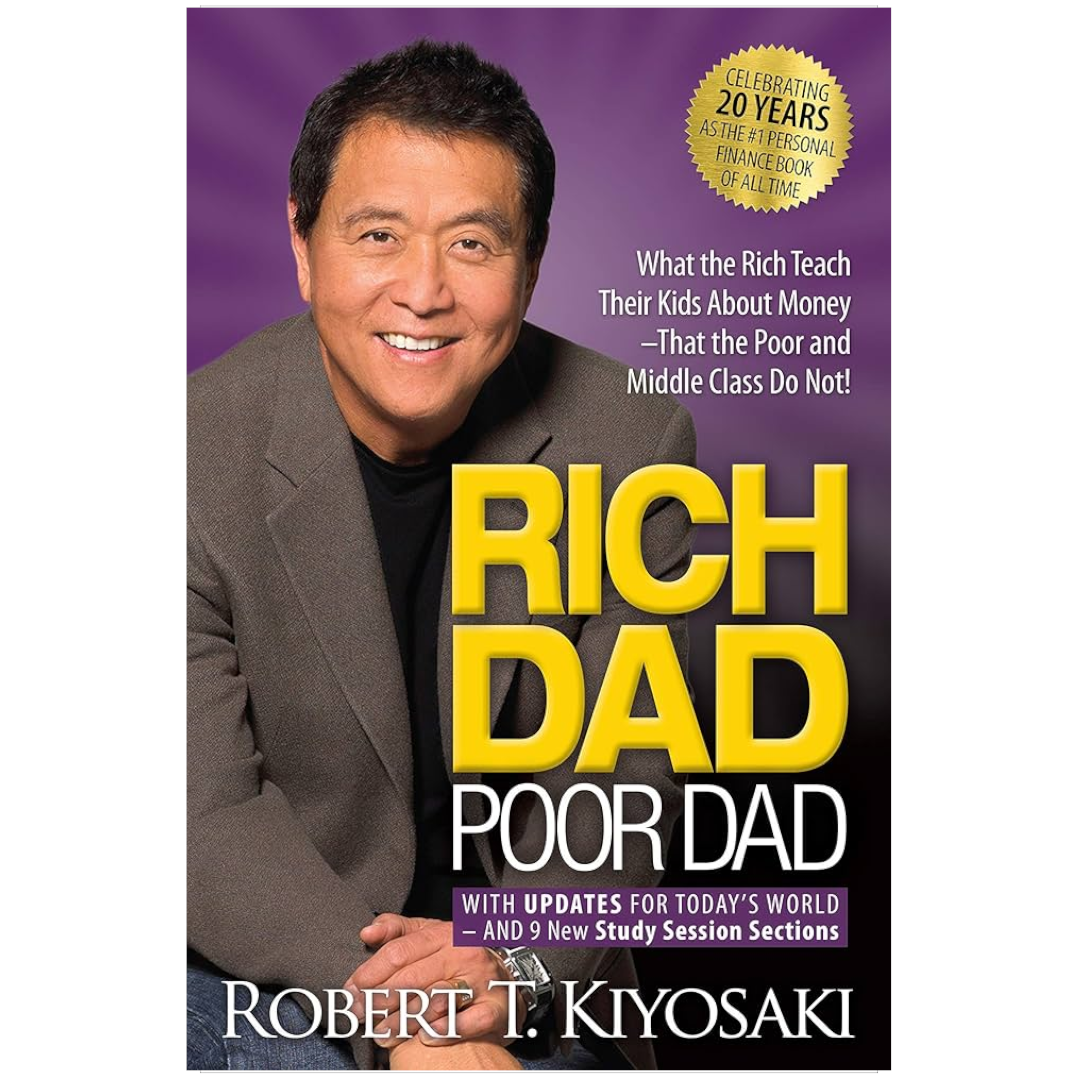
Rich Dad Poor Dad
Rich Dad Poor Dad by Robert Kiyosaki is a personal finance classic that challenges conventional thinking about money, work, and wealth. Framed through the contrasting influence of two father figures—his highly educated but financially struggling “Poor Dad” and his street-smart, financially independent “Rich Dad”—the book explores how mindset and financial education shape long-term outcomes more than income alone.
Kiyosaki argues that traditional education teaches people how to earn a living, but rarely how to manage their finances effectively. As a result, many intelligent and hardworking individuals remain trapped in a cycle of working for pay rises, promotions, and job security while struggling financially. In contrast, his “Rich Dad” philosophy emphasises understanding how money works and using it as a tool, rather than being controlled by it.
A central theme of the book is the distinction between assets and liabilities. Kiyosaki emphasises that true assets put money into your pocket, while liabilities take money out—even if they appear impressive on the surface. This idea encourages readers to question cultural assumptions around home ownership, consumer debt, and lifestyle inflation.
The book also highlights the importance of financial literacy, entrepreneurship, and taking calculated risks. Kiyosaki stresses that fear of failure and fear of losing money often prevent people from improving their financial position. By developing knowledge, discipline, and confidence, readers can make more informed decisions and build long-term wealth.
Overall, Rich Dad Poor Dad is less a step-by-step financial manual and more a mindset-shifting guide. It invites readers to rethink their relationship with money, challenge societal norms, and take greater responsibility for their financial future.
5 Key Takeaways
1. Financial Education Matters More Than Income
Kiyosaki explains that earning more money does not guarantee financial security. Without understanding how money works, a higher income often leads to higher spending. Financial education helps readers make smarter decisions, manage risk, and build systems that support wealth creation rather than relying solely on salary increases.
2. Assets and Liabilities Are Not What You Think
The book reframes assets as things that generate income and liabilities as things that create expenses. This distinction encourages readers to look beyond appearances and focus on cash flow. Understanding this principle helps people prioritise investments that build wealth instead of accumulating costly possessions.
3. Work to Learn, Not Just to Earn
Kiyosaki advises readers to value skill-building over short-term pay. Gaining knowledge in areas such as sales, investing, and business increases long-term opportunities. This mindset shift encourages strategic career choices that develop financial intelligence rather than chasing comfort or job security alone.
4. Fear Is the Biggest Barrier to Wealth
Fear of failure and fear of losing money often keep people stuck. The book teaches readers to manage fear through education and experience rather than avoidance. By learning from mistakes instead of fearing them, individuals can grow financially and make more confident decisions over time.
5. Mindset Shapes Financial Outcomes
Rich Dad Poor Dad emphasises that beliefs about money influence behaviour. Shifting from scarcity thinking to opportunity thinking helps readers see possibilities others miss. This mindset change encourages responsibility, creativity, and proactive decision-making in building long-term financial independence.