
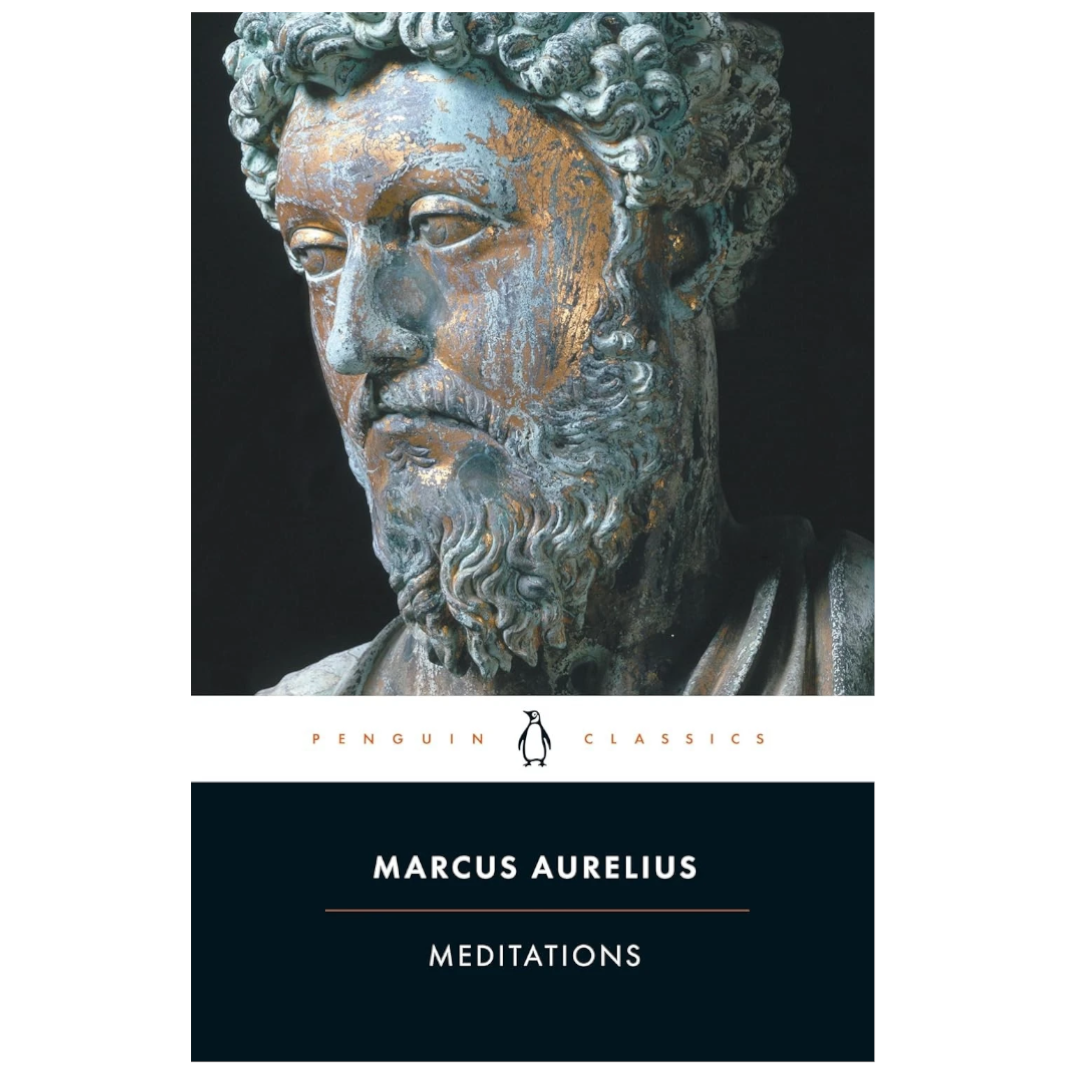
Meditations
Meditations by Marcus Aurelius is a timeless collection of personal reflections written by the Roman emperor as a guide to his own conduct and mindset. Rather than a formal book intended for publication, it is a series of private notes that reveal how Aurelius applied Stoic philosophy to navigate responsibility, pressure, and the unpredictability of life.
At its core, the work explores how to maintain inner stability in a world beyond one’s control. Aurelius repeatedly reminds himself to focus only on what can be governed—his thoughts, actions, and responses—while accepting external events with calmness and reason. This principle lies at the heart of Stoicism and forms the foundation of the book’s enduring relevance.
The text also emphasises the importance of duty, humility, and perspective. As a ruler with immense power, Aurelius reflects on the fleeting nature of fame, wealth, and status. He encourages himself to act with integrity, treat others fairly, and remain grounded despite external pressures.
Another recurring theme is the discipline of thought. Aurelius examines how negative emotions often arise from perception rather than reality. By questioning assumptions and viewing situations objectively, he aims to reduce anger, anxiety, and frustration.
Though written nearly two thousand years ago, Meditations remains strikingly practical. Its concise, reflective style invites readers to pause, consider their own behaviour, and develop a calmer, more resilient approach to life.
Overall, the book offers a powerful framework for self-discipline, emotional control, and ethical living, showing that true strength lies not in external achievements but in mastering one’s own mind.
5 Key Takeaways
1. Focus Only on What You Can Control
Aurelius teaches that energy should be directed towards thoughts, actions, and choices within your control. External events, opinions, and outcomes are often unpredictable. By accepting this, readers reduce frustration and anxiety, allowing them to respond more calmly and effectively to life’s challenges.
2. Perception Shapes Emotional Experience
The book highlights that distress often comes from how situations are interpreted rather than the events themselves. By questioning assumptions and viewing circumstances objectively, readers can reduce negative emotions and respond with greater clarity, improving both decision-making and emotional balance.
3. Practise Discipline in Thought and Action
Aurelius emphasises self-discipline as a daily practice. Acting with integrity, controlling impulses, and maintaining focus are essential for personal growth. Readers learn that consistent effort in small behaviours builds character and creates a sense of inner stability over time.
4. Accept Life’s Impermanence
The fleeting nature of life, success, and recognition is a recurring theme. Aurelius reminds readers that everything changes and eventually fades. Accepting this reality encourages humility, reduces attachment to status, and helps individuals focus on what truly matters in the present moment.
5. Act with Purpose and Integrity
The book stresses the importance of living according to values rather than external rewards. By focusing on fairness, honesty, and contribution, readers can lead more meaningful lives. Purpose-driven action provides a stable foundation, regardless of changing circumstances or external validation.