
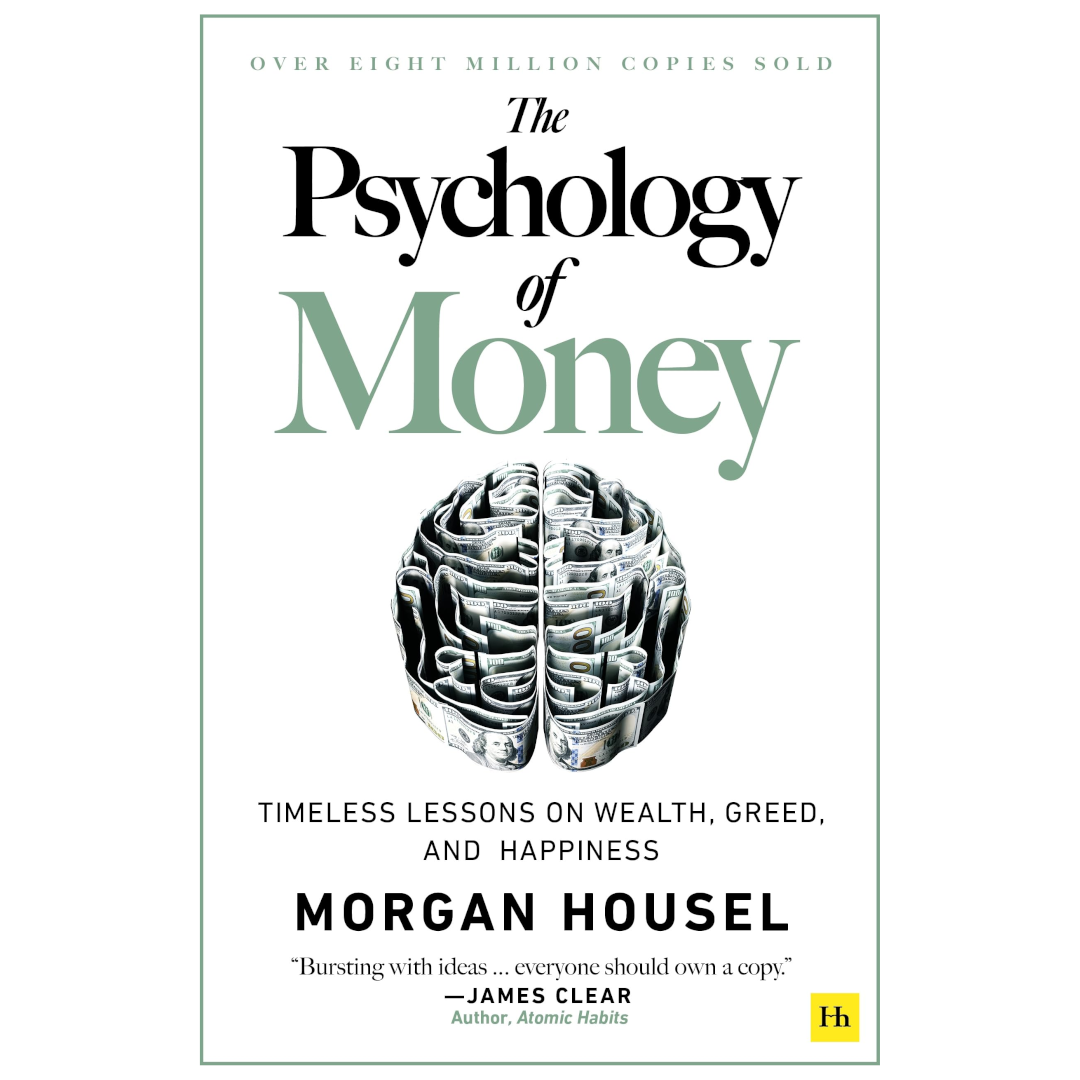
The Psychology of Money
The Psychology of Money by Morgan Housel examines how people think about money and why financial success is often driven more by behaviour than intelligence. Rather than focusing on complex investment strategies, Housel explores the emotional, psychological, and social forces that influence financial decisions. Through a series of short, engaging chapters, he illustrates how personal experiences, upbringing, and beliefs shape attitudes towards risk, saving, and spending.
Housel argues that doing well with money has less to do with technical knowledge and more to do with patience, discipline, and self-awareness. He highlights how reasonable people can make vastly different financial choices based on their unique life experiences. This perspective encourages humility and reduces judgement when comparing financial behaviour.
A central theme of the book is the power of compounding, not just financially but behaviourally. Small, consistent actions—such as saving regularly and avoiding unnecessary risk—can produce remarkable long-term outcomes. Conversely, overconfidence, greed, and the desire to impress others often undermine financial stability.
The book also emphasises the importance of defining personal enough. Many financial mistakes stem from comparison and the endless pursuit of more. By identifying what is sufficient for one’s own life, individuals can reduce stress and avoid unnecessary risk-taking.
Overall, The Psychology of Money offers timeless lessons about wealth, greed, and happiness. It encourages readers to prioritise long-term thinking, emotional control, and personal clarity over short-term gains and social validation.
5 Key Takeaways
1. Financial Success Is About Behaviour
Housel explains that managing money well depends more on consistent behaviour than intelligence. Patience, discipline, and emotional control often matter more than technical expertise. Readers learn that avoiding catastrophic mistakes and staying steady can outperform complicated, high-risk strategies.
2. Everyone’s Financial Story Is Personal
People make money decisions based on their own life experiences. Understanding this reduces comparison and judgment. Readers gain insight into their own financial habits and recognise that different approaches can be reasonable depending on individual backgrounds and circumstances.
3. Compounding Rewards Patience
The book highlights how small, consistent actions accumulate into significant results over time. Whether saving, investing, or building wealth, long-term commitment is essential. Readers are reminded that time, not timing, is often the most powerful factor in financial growth.
4. Define What ‘Enough’ Means
Chasing endless wealth can lead to unnecessary risk and dissatisfaction. Housel encourages readers to clarify what is truly sufficient for their lifestyle and goals. Knowing when enough is enough protects happiness and promotes more thoughtful financial decisions.
5. Avoid Big Mistakes at All Costs
Staying financially secure often means preventing major errors rather than chasing extraordinary gains. Readers learn that resilience, maintaining savings, avoiding excessive debt, and staying flexible, creates long-term stability and peace of mind.