
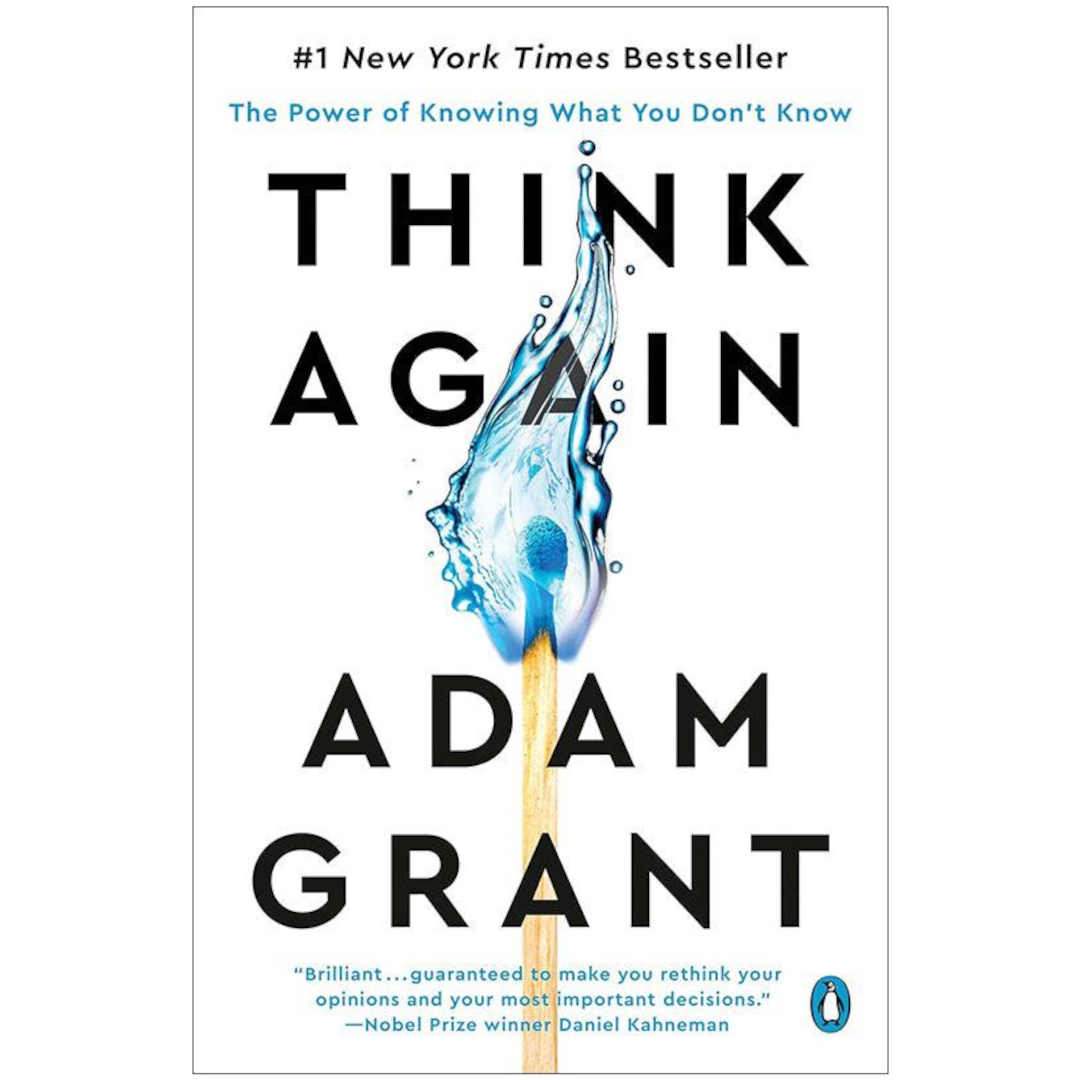
Think Again
Think Again by Adam Grant is a thought-provoking book about the value of rethinking our beliefs, assumptions, and opinions. Drawing on psychology, behavioural science, and real-world examples, Grant argues that intelligence is not just about how much we know, but about our willingness to question what we think we know. In a rapidly changing world, the ability to rethink may be one of the most important skills a person can develop.
Grant suggests that many people become trapped by certainty. Once an opinion is formed, there is a tendency to defend it rather than examine it. He describes how individuals often adopt the mindset of a preacher, prosecutor, or politician, seeking to persuade others or defend existing views. Instead, he advocates thinking like a scientist, remaining curious, testing assumptions, and being willing to change one's mind when presented with better evidence.
Throughout the book, Grant explores why some people and organisations struggle to adapt while others thrive. He highlights the importance of intellectual humility, the ability to recognise that knowledge is incomplete and that being wrong is not a weakness but an opportunity to learn.
The book also examines how productive disagreement can improve decision-making. Rather than avoiding conflict or trying to win arguments, Grant encourages meaningful conversations where ideas are challenged respectfully. This approach leads to better understanding and stronger outcomes.
Overall, Think Again is a refreshing reminder that growth often comes from questioning long-held assumptions. It encourages readers to stay curious, embrace uncertainty, and treat their beliefs as working theories rather than fixed truths.
5 Key Takeaways
1. Being Wrong Is Part of Learning
Grant argues that changing your mind should be seen as a sign of growth rather than weakness. People who are willing to revise their beliefs often make better decisions because they remain open to new information. Readers learn to view mistakes as opportunities for improvement rather than threats to their identity.
2. Think Like a Scientist
The book encourages readers to approach opinions as hypotheses rather than facts. Scientists test ideas and update conclusions when evidence changes. Adopting this mindset promotes curiosity, flexibility, and better judgment, helping individuals avoid becoming trapped by outdated assumptions.
3. Confidence and Humility Can Coexist
Grant introduces the idea of confident humility, believing in your ability to learn while recognising that you may not have all the answers. This balance allows readers to remain open-minded without becoming indecisive or lacking conviction.
4. Good Conversations Beat Arguments
The book demonstrates that productive discussions are more valuable than trying to win debates. Asking thoughtful questions and listening carefully helps uncover new perspectives. Readers learn how meaningful dialogue can improve relationships, understanding, and decision-making.
5. Curiosity Drives Personal Growth
A willingness to question assumptions and explore alternative viewpoints encourages continuous learning. Grant shows that curiosity helps people adapt to changing circumstances and avoid becoming complacent. Readers are reminded that growth often begins with the simple question: "What if I am wrong?"