
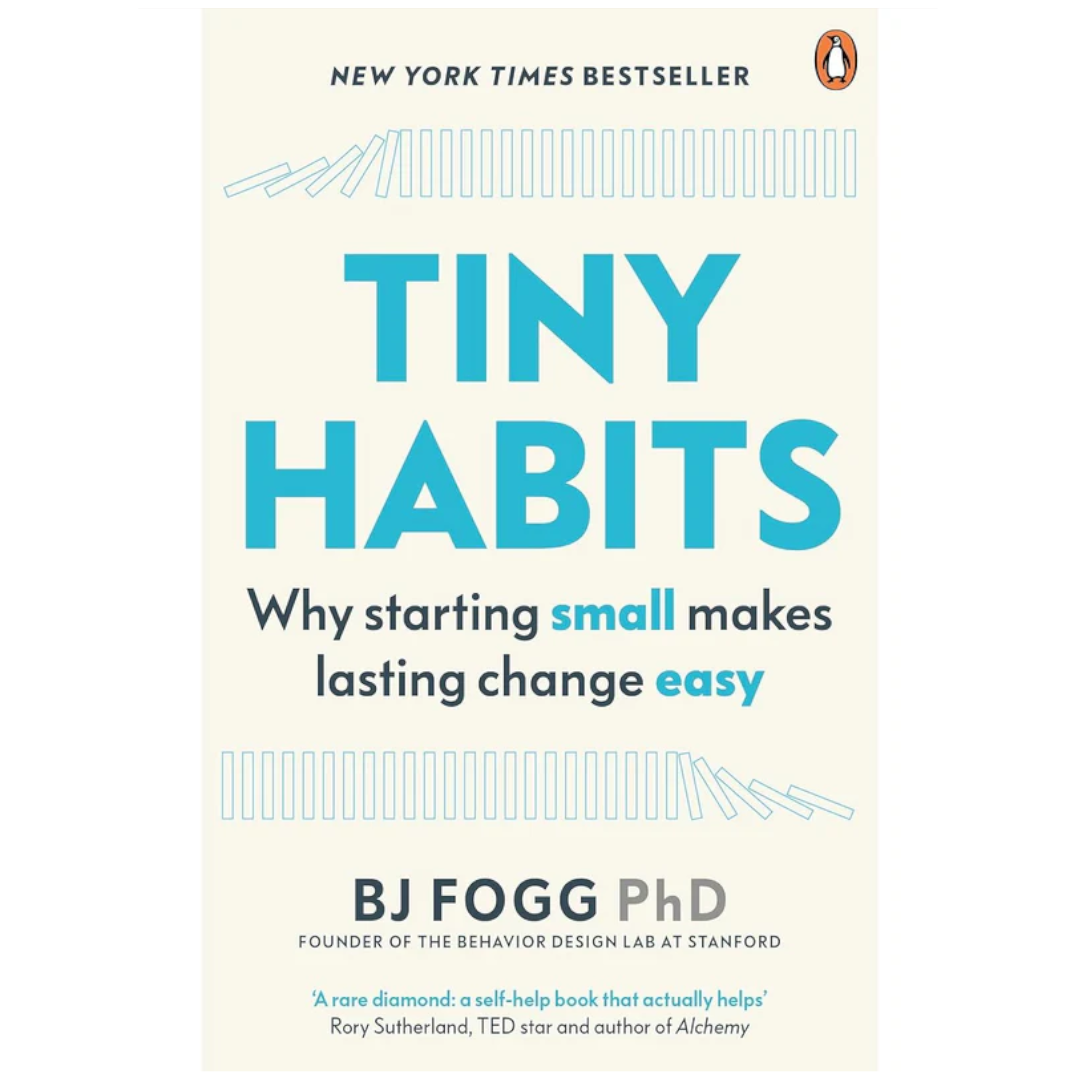
Tiny Habits
Tiny Habits by BJ Fogg is a practical and research-based guide to creating lasting behavioural change through small, manageable actions. Drawing on decades of work in behavioural science at Stanford University, Fogg challenges the common belief that major transformation requires extreme motivation or willpower. Instead, he argues that lasting habits are built through simplicity, consistency, and positive emotion.
At the heart of the book is the idea that people often fail because they attempt changes that are too large or demanding. Ambitious goals can create pressure and inconsistency, leading to frustration and abandonment. Fogg proposes a different approach: start incredibly small. By making a behaviour easy enough to do even on difficult days, individuals increase the likelihood of repetition, which is the true foundation of habit formation.
A central method in the book is the “Tiny Habits” technique, where a small new behaviour is attached to an existing routine. For example, doing two push-ups after brushing your teeth creates a reliable trigger that helps the habit become automatic over time. Fogg emphasises that celebrating small successes is equally important, as positive emotions reinforce behaviour more effectively than self-criticism.
The book also explores how the environment and design influence behaviour. Rather than relying on motivation alone, Fogg encourages readers to make desired habits easier and unwanted habits harder. This practical mindset removes much of the guilt associated with failed self-improvement attempts.
Overall, Tiny Habits presents behaviour change as something achievable and sustainable. It offers a compassionate, realistic framework for building healthier routines and improving daily life through small, consistent actions.
5 Key Takeaways
1. Small Actions Create Lasting Change
Fogg explains that tiny behaviours repeated consistently are more effective than dramatic but short-lived efforts. Starting small removes resistance and makes habits easier to maintain. Readers learn that sustainable progress often begins with actions so simple they feel almost impossible to fail.
2. Motivation Is Unreliable
The book challenges the idea that success depends on feeling motivated. Motivation naturally rises and falls, making it a weak foundation for long-term habits. By designing behaviours to be simple and easy, readers can stay consistent even when enthusiasm disappears.
3. Positive Emotions Reinforce Habits
Celebrating small successes helps the brain associate habits with positive feelings. Fogg emphasises that feeling good after completing a behaviour increases the likelihood of repeating it. Readers gain a healthier alternative to guilt and self-criticism as they try to improve their routines.
4. Existing Routines Can Trigger New Habits
Attaching a tiny new behaviour to an established routine creates consistency. This technique, known as anchoring, uses existing habits as reminders for new actions. Readers learn how to integrate positive changes naturally into daily life without relying on memory or discipline alone.
5. Environment Shapes Behaviour
Fogg highlights how surroundings influence habits more than people often realise. Making good habits easier and bad habits harder increases the chance of success. Readers understand that changing their environment can reduce friction and support healthier behaviours automatically.